Bathrooms are small rooms that work harder than most spaces in a home. Steam from showers, daily water exposure, and tight ventilation can break down the wrong paint fast. That is why choosing the best paint for bathroom walls and ceiling matters more here than anywhere else.
This guide breaks everything down in plain language. We will walk through what actually works on bathroom walls, ceilings, trim, and especially cabinets, since cabinets tend to show wear first. The goal is clarity, not confusion, so you can understand what goes into professional paint decisions and why those choices hold up long term.
Key Takeaways:
- The best paint for bathroom walls and ceiling resists moisture, cleans easily, and holds its finish over time. Sheen choice matters more than color in these spaces.
- Satin and semi-gloss finishes perform better on bathroom walls because they shed water and handle regular cleaning without breaking down.
- Bathroom ceilings benefit from satin or semi-gloss paint since steam rises and settles there first, increasing the risk of mildew.
- Cabinets need stronger adhesion and tougher coatings than walls due to frequent handling and water exposure near sinks.
- Long-lasting bathroom results depend on the full system: surface prep, primer selection, paint base, and finish working together.
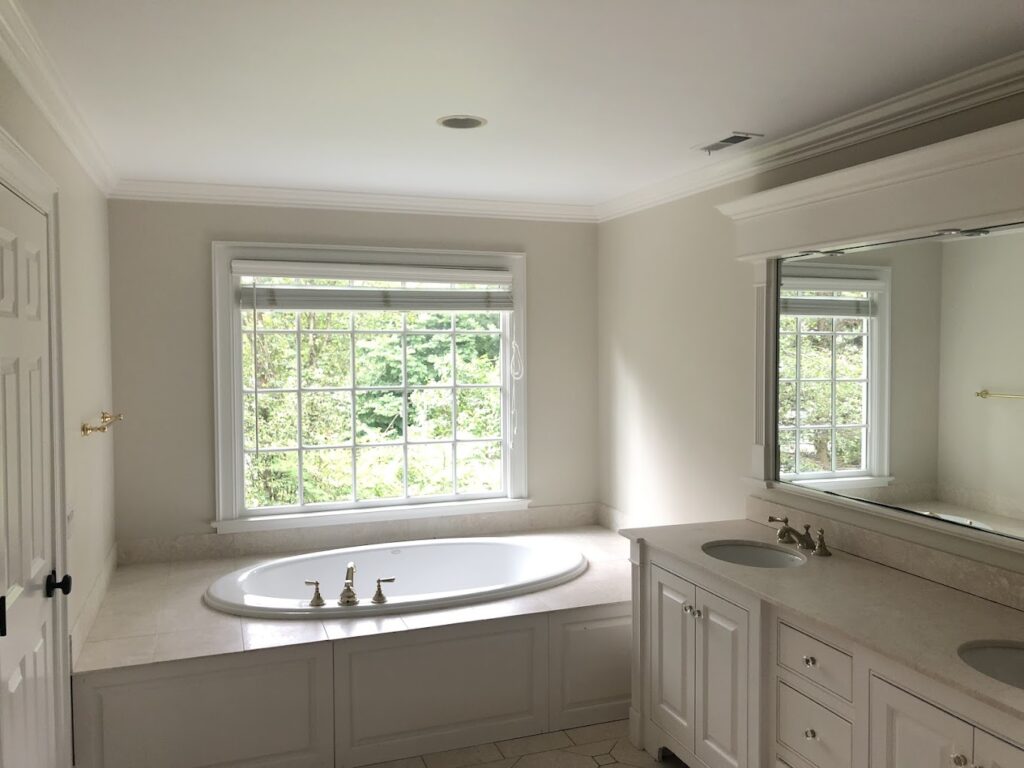
Why Bathrooms Demand A Different Paint Strategy
Bathrooms deal with moisture almost daily. Hot showers create steam that settles on walls, ceilings, cabinets, and trim. Over time, that moisture can seep into paint, leading to peeling, mildew, or dull patches.
The best paint for bathroom walls and ceiling needs to do a few things well:
- Resist moisture and humidity
- Clean easily without losing its finish
- Reduce the chance of mildew forming
- Hold color and sheen over time
Cabinets add another layer of complexity. They get touched constantly and sit near sinks where water splashes are common. That is why cabinet paint choices often differ from wall and ceiling paint.
Start With The Surface Before You Think About Paint
Paint performance starts with what is underneath. A glossy surface, bare drywall, or previously damaged paint all behave differently. Skipping this step is one of the fastest ways bathrooms fail.
Surfaces in bathrooms usually fall into one of these categories:
- Previously painted walls with a satin or semi-gloss finish
- New drywall from a renovation
- Cabinets with factory finishes or older oil based coatings
Each surface needs the right prep and primer combination. Primer helps with adhesion, blocks moisture, and creates a uniform base so the topcoat performs as expected.
For new drywall, a drywall or PVA primer helps seal the surface. In high humidity bathrooms, a moisture resistant or mildew resistant primer adds another layer of protection. Cabinets often need bonding primers designed for wood or previously coated surfaces.
Choosing The Right Paint Base For Bathrooms
Most modern bathroom projects rely on water based latex paint. Latex paint handles moisture well, cleans easily with water, and releases fewer volatile organic compounds during drying.
Latex paint works well for:
- Bathroom walls
- Ceilings
- Trim and doors
- Many cabinet applications with the right prep
Oil based paint still has a place, mainly for cabinets or trim that see heavy use. It dries harder and resists wear well, but it releases higher VOCs and can yellow over time. Many professionals now lean toward advanced acrylic paints that mimic oil durability without the downsides.
Paint Finish Matters More Than Color In Bathrooms
Finish choice has a bigger impact on performance than color ever will. The best paint for bathroom walls and ceiling almost always comes down to sheen selection.
Satin And Semi-Gloss For Walls
Satin is a popular choice for bathroom walls because it balances durability with a softer look. It resists moisture and cleans easily without drawing attention to every wall flaw.
Semi-gloss steps things up a notch. It sheds water better and handles frequent cleaning, which makes it a solid option for busy bathrooms.
If you want a deeper comparison, satin paint vs. matte paint explains why lower sheen finishes struggle in humid spaces.
Why Flat And Matte Struggle In Bathrooms
Flat and matte finishes soak up moisture more easily and do not respond well to scrubbing. Over time, they can develop shiny spots or discoloration. These finishes work better in low humidity spaces, not bathrooms with daily showers.
Eggshell Has Limits
Eggshell sits between matte and satin, but it still has limits in bathrooms. It can work in powder rooms with minimal moisture, but full bathrooms usually benefit from more durability. The tradeoffs are outlined clearly in eggshell vs. semi-gloss paint, especially for rooms with steam and condensation.
The Best Paint Finish For Bathroom Ceilings
Ceilings are often overlooked, but they collect a lot of moisture. Steam rises and settles there first.
For ceilings, avoid standard flat ceiling paint. Instead:
- Satin works well for powder rooms or lightly used baths
- Semi-gloss performs better in steamy bathrooms with showers
Semi-gloss resists mildew better and wipes clean when moisture stains appear. It also reflects light, which helps smaller bathrooms feel brighter.
Cabinets Deserve Special Attention In Bathrooms
Bathroom cabinets take more abuse than walls. Water drips, fingerprints, and cleaning products all wear down paint faster here.
The best paint for bathroom walls and ceiling may not be the same paint used on cabinets. Cabinets benefit from coatings designed for adhesion and durability.
Key cabinet paint qualities include:
- Strong adhesion to wood or previous finishes
- Resistance to moisture and daily handling
- A finish that cleans without dulling
Semi-gloss and gloss finishes are common for cabinets because they repel moisture and handle frequent wiping. Gloss shows imperfections more easily, while semi-gloss offers a more forgiving balance.
Paint chemistry also matters here. High-quality acrylic cabinet paints outperform standard wall paint when it comes to wear.
How Lighting And Color Affect Bathroom Paint Choices
Lighting changes how paint looks in a bathroom. Artificial lighting, small windows, and reflective surfaces all play a role.
Before locking in a color, think about:
- Natural vs artificial light
- Light bouncing off tile, mirrors, and fixtures
- How darker colors may appear deeper in low light
Color also interacts with sheen. Higher gloss finishes reflect more light, which can make colors appear brighter. Lower sheen finishes absorb more light and can appear softer.
This is where understanding color behavior helps. Does paint dry darker or lighter breaks down why samples sometimes look different after curing.
How Cabinets, Walls, And Ceilings Work Together
Bathrooms feel more cohesive when paint choices work together instead of competing.
A balanced approach often looks like this:
- Cabinets in semi-gloss for durability
- Walls in satin for a softer feel
- Ceilings in semi-gloss for moisture control
Trim often matches cabinet sheen to create consistency. When finishes align, bathrooms feel intentional instead of pieced together.
If you want a broader view of paint options across rooms, different types of interior paint offers helpful context on how finishes vary by space.
Long Term Performance Comes From The Right System
Paint alone does not solve bathroom problems. Long term success comes from a system that includes:
- Proper surface prep
- The right primer for the surface
- A paint base designed for moisture
- A finish that matches how the space is used
This system approach is why professionally painted bathrooms hold up longer and look better over time.
Why Professional Application Makes A Difference
Bathrooms are unforgiving spaces. Small mistakes show quickly, especially on cabinets and glossy finishes. Professional painters follow a structured process that accounts for moisture, adhesion, and finish performance.
At [company], our approach focuses on results that last, not shortcuts.
Our process typically includes:
- Careful surface evaluation and prep
- Primers selected for humidity and adhesion
- Paint systems matched to walls, ceilings, and cabinets
- Clean application that avoids lap marks and buildup
Homeowners working with experienced painters in Darien, CT, benefit from this level of detail, especially in moisture-heavy spaces like bathrooms.
Final Thoughts On Choosing The Best Paint For Bathroom Walls And Ceiling
Choosing the best paint for bathroom walls and ceiling comes down to understanding how moisture, finish, and surface type work together. Satin and semi-gloss finishes outperform flatter options, ceilings need more protection than most people expect, and cabinets require coatings built for durability. When all parts work as a system, bathrooms stay cleaner, brighter, and easier to maintain.
If you are planning a bathroom update in Darien, Easton, Fairfield, CT, or the surrounding areas, GREENHaus Painting can help guide the process from start to finish. We focus on surfaces, finishes, and application methods that hold up in real homes.
Call us at 203-429-4424 for a FREE estimate and a clear plan built around your space, not guesswork.