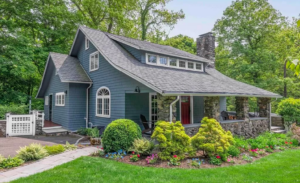
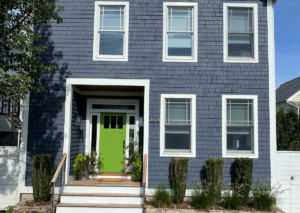
Ask three painters in Fairfield County what it costs to paint a home’s exterior, and you can end up with three numbers that look like they belong to three different projects. One quote comes in thousands less than another, and it is not immediately obvious why.
That gap almost never comes down to one company being honest and another padding the bill. It comes down to what each number actually accounts for. Prep work, paint grade, the age and condition of your siding, and how much trim and detail work is involved can all shift a project by thousands of dollars, and none of that shows up if the quote is just one lump total.
Fairfield County’s housing stock makes this especially relevant. Big, older homes with a lot of trim, multiple stories, and decades of prior paint layers price out very differently than a newer, simpler build, even at similar square footage.
This 2026 guide breaks down what actually drives exterior painting cost in this market, how labor and prep shape the number, what paint grade and coat count add to the bill, and how to budget realistically for your specific home. Understanding these pieces before you request quotes puts you in a much stronger position to compare them.
In this article, you will learn about:
- What drives exterior painting cost up or down
- How labor and prep shape the bottom line
- What paint grade and coat count actually add to the price
- How to budget your exterior project realistically
Keep reading to see where your money actually goes and how to plan a number that will hold up once the work begins.
What drives exterior painting cost up or down
Exterior painting cost is built from several separate factors, and no two homes in this county combine them the same way. Square footage matters, but it is far from the whole story.
Homeowners often assume paint itself is the biggest expense. In most cases it is not. The condition of your siding, the complexity of your home’s shape, and the amount of trim and detail work usually account for a larger share of the total than the paint cans do.
Before comparing quotes, it helps to understand what actually separates a low number from a high one on paper.
Square footage and the shape of your home
The starting point for any exterior estimate is measuring the actual surface area, elevation by elevation, rather than relying on a single square footage figure pulled from a listing.
Two homes with identical square footage can price out very differently depending on shape. A home with multiple gables, dormers, or roof lines takes longer to prep and paint carefully than a simple rectangular structure of the same size. That complexity shows up often in older colonial and farmhouse-style homes common throughout Fairfield County, where architectural detail tends to run higher than in newer construction.
A few shape-related factors that change the math on a bigger or older home:
- Multiple gables, dormers, or roof lines that add cutting-in time
- Extensive trim, shutters, or decorative siding details
- Two or three stories, which changes ladder, scaffold, or lift needs
- Bay windows or other non-flat wall sections that break up a clean surface
None of this means a bigger or more detailed home automatically costs proportionally more. It means the shape of the house, not just the raw square footage, determines how much labor the job actually requires.
Prep work and existing surface condition
Prep is the part of an exterior job that is easiest to underestimate and the most common source of price gaps between quotes. A wall that just needs a light wash and a coat of primer costs far less to paint than siding with peeling paint, exposed wood, or old caulk that needs to be stripped first.
Connecticut’s freeze-thaw winters are hard on painted exteriors specifically. Repeated freezing and thawing causes existing paint to crack and lift faster than it would in a milder climate, which means more scraping, sanding, and priming before a single coat of new paint goes on. Homes with a longer paint history, common throughout older Fairfield County housing stock, often need noticeably more of this prep than a newer exterior.
A few signs your exterior needs more prep than a simple wash and prime:
- Visible cracking or lifting along siding seams or corners
- Multiple layers of old paint that have started to peel or flake
- Soft or discolored trim near ground level or windowsills
- Bare wood exposed where old paint has already failed
Lead paint considerations on older homes
Homes built before 1978 add a real, sometimes overlooked cost factor. The Environmental Protection Agency requires that any paid renovation work disturbing more than 20 square feet of exterior painted surface on a pre-1978 home follow federally mandated lead-safe work practices, and the agency has taken enforcement action against painting contractors in Connecticut specifically for skipping those requirements.
That containment and cleanup protocol adds real time and material cost to a project on an older home, but it exists for a genuine safety reason and is not a cost a responsible contractor can skip. A quote on a pre-1978 Fairfield County home that does not account for this at all is worth asking about directly.
How labor and prep shape the bottom line
Labor is typically the largest single line item in an exterior painting project, and prep work is where a large share of that labor actually goes.
Homeowners sometimes assume the visible painting, the actual rolling and brushing, is where most of the cost lives. In reality, the steps before that, protecting landscaping and windows, scraping and sanding, caulking, and priming problem areas, often take as long as the painting itself, especially on an older exterior.
Why prep drives so much of the labor cost
A wall that needs only a light wash and a single coat of primer is a fast, lower-cost job. A wall with peeling paint, soft trim, or heavy scraping needs is a different project entirely, even if the square footage is identical to a well-maintained home next door.
Skipping prep to bring a quote down is one of the most common ways an exterior job ends up failing early. Paint applied over a poorly prepped surface can peel or crack within a season or two rather than lasting the better part of a decade, which turns a lower upfront number into a more expensive project down the line.
What determines labor cost specifically
According to the U.S. Bureau of Labor Statistics, the median annual wage for painting and coating workers was $40,860 as of May 2024. That figure helps explain why labor hours, not the price of a paint can, tend to drive most of an exterior project’s total cost.
Labor cost on an exterior job reflects crew size, how many days the project takes, and how much of that time goes to prep versus painting. A full exterior repaint on a larger, more detailed home simply requires more crew hours than a smaller, simpler one, and that difference shows up directly in the labor line of the quote. Timing also plays into labor efficiency: the USDA Forest Service Forest Products Laboratory notes that latex paint needs a minimum surface temperature of about 50°F to cure properly, so a project scheduled outside that window can mean slower drying, more callback risk, and less efficient crew time.
Access and equipment needs
Height and access change labor cost in ways that are easy to overlook when comparing quotes. A single-story ranch with easy ground access costs less to staff and equip than a two-story colonial with steep rooflines, since the second home needs ladders, scaffolding, or lifts that take time to set up and move throughout the project.
Landscaping and site conditions factor in too. A home with mature trees close to the siding, a narrow side yard, or a pool close to the foundation can slow down equipment setup and require extra protective measures that a more open lot would not need. None of this is usually itemized as its own line, but it shows up in how many total labor hours the project ends up requiring.
A few access factors worth mentioning to your painter before booking:
- Whether ladders and scaffolding can reach every elevation safely
- Landscaping, fencing, or pools that limit equipment placement
- Steep grading or slopes around the foundation
- Shared walls or tight spacing between neighboring properties
What paint grade and coat count actually add to the price
Paint itself is a smaller line item than most homeowners expect, but grade and coat count still move the number more than people assume, especially on an exterior exposed to weather year-round.
Builder-grade versus premium exterior paint
Premium exterior paints cost more per gallon, but they typically cover better, resist fading and chalking longer, and hold up better against Connecticut’s freeze-thaw cycle than lower-cost alternatives. That durability difference can offset some of the higher upfront cost by extending the interval before the next full repaint.
Lower-cost paints often need more coats to achieve even coverage, particularly over an existing dark color or heavily patched siding. A serious estimate specifies both the product line and the coat count, not just “quality paint” as a vague line item that could mean very different things between two contractors.
How many coats your exterior actually needs
Going from a dark existing color to a significantly lighter one, or covering siding that has been patched or repaired in multiple spots, almost always requires more than a single coat to look even. Skipping that second coat to save money on the estimate usually shows up later as a blotchy, uneven finish.
A few situations that typically call for an extra coat on an exterior:
- Moving from a dark or saturated color to a noticeably lighter one
- Painting over siding with several patched or repaired sections
- Covering staining or discoloration that could bleed through a single coat
- Repainting bare or heavily weathered wood that absorbs unevenly
Trim, shutters, and accent details
Trim, shutters, and doors are usually priced separately from the main body of the house, since they often use a different sheen or color and require more careful cutting-in work. On a Fairfield County home with extensive trim and molding detail, this line item can represent a meaningful share of the total, even though the square footage involved is relatively small.
Shutters in particular add time in a way that is easy to underestimate. Removing, painting, and reinstalling shutters properly takes real labor hours per shutter, and a home with a dozen or more can see that add up to a noticeable chunk of the schedule. Homeowners comparing quotes should confirm whether shutter removal and reinstallation is included or billed as an add-on, since that detail alone can explain a meaningful gap between two numbers.
How to budget your exterior project realistically
A realistic exterior painting budget starts with understanding which of these factors apply to your specific home, not with a single number pulled from a generic size-based calculator.
Start with an in-person walkthrough, not a phone estimate
A number given over the phone or through an online form is a starting point, not a final figure. The real cost only becomes clear once someone has walked your property, checked the condition of your siding and trim, and talked through your color and finish choices.
During a proper walkthrough, a painter typically works through several steps in order.
- Measures each elevation individually rather than relying on a single combined square footage figure
- Assesses siding and trim condition for peeling, cracking, soft spots, or previous repairs
- Confirms the home’s approximate build year, since pre-1978 homes carry additional lead-safe requirements
- Discusses your color and finish preferences, since that affects the coat count and product choice
- Confirms your timeline and any scheduling constraints, including Connecticut’s seasonal weather window
Get the estimate broken down by category
A useful budget is not a single lump-sum number. Ask for a breakdown that separates labor, prep, and materials, so you can see exactly where the money is going and compare that breakdown against other quotes on equal terms.
This is also where it helps to ask about the prep process specifically. Some painters include scraping, sanding, caulking, and priming as standard practice. Others treat those steps as add-ons that show up later, once the project has already started.
Build in room for the unexpected
Older Fairfield County homes sometimes reveal issues once prep work begins that were not visible during the initial walkthrough, like rot behind a piece of trim or siding damage hidden by overgrown landscaping. A responsible painter will flag this possibility upfront rather than promising a number that can never change under any circumstance.
Building a small buffer into your budget, rather than assuming the first quoted number is guaranteed to be final, protects you from an unpleasant surprise partway through the project.
Conclusion
Exterior painting cost in Fairfield County depends far more on your specific home than on a single average number. Square footage matters, but shape, surface condition, paint grade, coat count, and the home’s age all move the total in ways a generic calculator cannot account for.
The homeowners who end up happiest with their budget are the ones who get a real in-person walkthrough, ask for an itemized breakdown, and understand upfront which factors are driving their particular number. That approach turns an intimidating range into a specific, explainable figure you can actually plan around.
If you are planning an exterior painting project in Fairfield County or Southern Connecticut, Greenhaus offers free, in-person estimates that walk through exactly what your home needs before any number gets written down. Greenhaus can put together that walkthrough and a clear, itemized cost breakdown for your project.