Paint colors that increase home value in Fairfield County, CT are not chosen by personal taste alone. In a market where buyers compare homes at speed and form first impressions before stepping through the door, color choices on both the exterior and interior directly influence perceived value, time on market, and final sale price.
In this article, you will learn which specific colors and palettes professional painters and real estate professionals recommend for Fairfield County homes, why certain shades outperform others in Connecticut’s architectural and market context, and how to approach color decisions room by room.
Here’s what you need to know.
- What the research actually says about color and home value
- Which exterior colors give Fairfield County homes the strongest curb appeal
- Which interior colors buyers respond to most in today’s market
- How to build a cohesive color strategy before listing or renovating
Keep reading to understand how a well-planned paint palette can be one of the highest-return investments you make before selling or updating your home.
What does the research actually say about paint color and home value?
Color is not just a design preference in real estate. It functions as a pricing signal. Understanding what the data shows helps homeowners make decisions grounded in buyer behavior rather than personal preference.
Why neutral tones consistently outperform bold choices at resale
Neutral paint colors reduce the perceived effort a buyer associates with moving in. When a home is painted in strongly personalized or saturated tones, buyers mentally add a repainting line item to their offer calculation, even if they never verbalize it.
Whites, warm greiges, soft taupes, and light grays create a visual baseline that allows buyers to project their own furnishings and style onto a space. This psychological neutrality is what drives faster sales and stronger offers, not the colors themselves in isolation.
According to a study published by researchers at Virginia Tech’s College of Architecture and Urban Studies, interior color saturation directly affects buyer perception of space size, with lower-saturation walls consistently making rooms read as larger and more open, a measurable factor in residential valuation.
In Fairfield County’s competitive market, where buyers are often comparing multiple properties in a single weekend, interior painting services refreshed in buyer-friendly neutrals before listing consistently reduce days on market compared to homes with dated or highly personalized color schemes.
Do exterior paint colors actually affect appraisal value?
The short answer is yes, and the mechanism is more direct than most homeowners expect. Appraisers assess condition as a component of value, and exterior paint condition is one of the most visible condition signals available during a drive-by or walkthrough appraisal.
A freshly painted exterior in a contextually appropriate color signals maintenance discipline to both appraisers and buyers. Conversely, a peeling or visually mismatched exterior signals deferred maintenance, which appraisers can and do discount in their final valuations.
According to the U.S. Department of Housing and Urban Development’s guidelines on residential property condition assessment, exterior coating condition is among the primary observable indicators used to rate the physical condition of a single-family home. In practical terms, a well-executed exterior repaint in a market-appropriate color is one of the few cosmetic improvements that can directly lift an appraised condition rating.
For homeowners considering painting brick exterior white or other distinctive exterior treatments, the key question is whether the chosen finish reads as intentional and well-executed or as an outlier in the neighborhood context.
How Fairfield County’s architectural character shapes color decisions
Fairfield County has a distinctly layered architectural landscape. Colonial revivals, Capes, Tudors, mid-century ranches, and contemporary custom builds coexist across towns like Westport, Greenwich, Wilton, Darien, and New Canaan. Each architectural style has a color vocabulary that buyers in that segment expect.
A colonial with white clapboard siding and black shutters reads as correctly resolved. The same home painted in a trendy deep blue-green may attract attention but also narrows the buyer pool to those who share that aesthetic preference. Expanding buyer appeal means working within the architectural logic of the style, not against it.
Understanding the best paint colors for Connecticut homes in context means considering not just current trends but also how a color will read against the natural materials, landscaping, and neighboring homes typical of each town’s streetscape.
Which exterior colors give Fairfield County homes the strongest curb appeal?
Exterior color is the first data point a buyer processes. It sets the expectation for everything inside. Getting it right means understanding both what is timeless in Connecticut’s market and what is currently resonating with active buyers.
The classic palette that never loses buyer appeal in Connecticut
Connecticut’s New England architectural heritage creates a strong baseline preference for traditional exterior palettes. These are not boring choices. They are the colors that appraise cleanly, photograph well, and hold buyer appeal across market cycles.
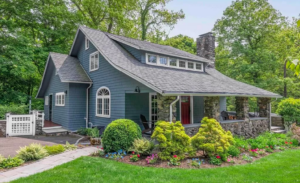
- White and off-white: Benjamin Moore Chantilly Lace (OC-65) and White Dove (OC-17) remain the dominant choices for colonial and cape-style homes. They read as crisp, well-maintained, and architecturally correct.
- Warm gray and greige: Sherwin-Williams Accessible Beige (SW 7036) and Agreeable Gray (SW 7029) perform strongly on Tudors, ranches, and transitional builds where pure white reads as too stark.
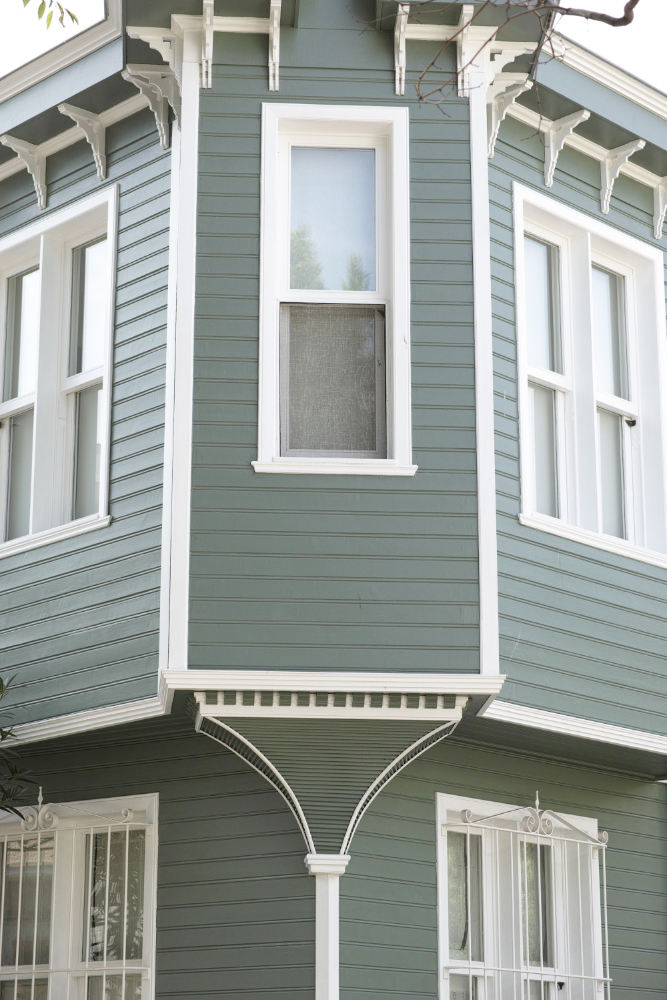
- Soft sage and muted green: Low-saturation greens complement Connecticut’s wooded lots and natural stone foundations. Benjamin Moore’s Pale Smoke and HC-114 Brookline Beige with green undertones work particularly well in Wilton, Ridgefield, and Redding.
- Classic black and charcoal for accents: Shutters, doors, and trim in deep black or charcoal anchor the exterior and create the high-contrast definition buyers associate with premium homes.
What color is doing on the front door right now
The front door is the highest-return single color decision on any exterior. It receives the most photographic attention in listings and creates the strongest first impression during showings.
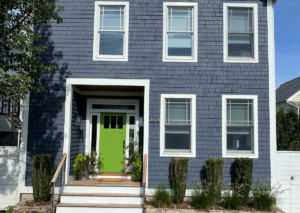
Deep, saturated door colors paired with neutral body tones are the formula that consistently performs. Navy, forest green, black, and oxblood red all function as strong door choices on Connecticut colonials and Capes because they signal intentionality and confidence without disrupting the overall palette.
Pros of a bold front door color:
- Photographs exceptionally well in listing images
- Creates a memorable first impression that distinguishes the home in a buyer’s mental inventory
- Signals that the home has been thoughtfully maintained and updated
- Adds perceived value without requiring a full exterior repaint
Cons of an overly trendy door color:
- Colors that peak in a specific year can read as dated within 18 to 24 months
- Very unusual choices like bright yellow or stark orange narrow the buyer pool
- Some HOA-governed communities in Fairfield County restrict non-standard door colors
For homes planning a full exterior house painting project before listing, coordinating the door color within the overall palette during the same project avoids mismatched touch-up work later.
Color mistakes that reduce perceived value on Fairfield County homes
Not every color decision is neutral in its effect on buyer perception. Some choices actively reduce the pool of interested buyers or signal a mismatch between the home’s architecture and its current presentation.
- Highly saturated body colors on traditional architecture read as a renovation project to conservative buyers, who represent a significant share of Fairfield County’s buyer demographic
- Mismatched trim colors that were chosen at different times and never resolved into a cohesive system make exteriors look piecemeal
- Dark body colors on small homes reduce perceived square footage and make homes photograph smaller than they are
- Faded or chalking paint left in place under new paint without proper prep signals that the repaint was cosmetic rather than structural, which experienced buyers and inspectors notice
Understanding the house painting cost in Fairfield County before planning an exterior project helps homeowners budget realistically for both prep and color work done correctly.
Which interior colors do buyers respond to most in today’s market?
Interior color strategy for resale is distinct from interior color strategy for living. The goal shifts from personal comfort to broad appeal, and the decisions that follow reflect that shift.
Room-by-room color priorities that buyers notice first
Buyers do not evaluate all rooms equally. They form the strongest impressions in the spaces they spend the most time imaging themselves in, which means the kitchen, primary bedroom, and main living area carry disproportionate weight in their overall color assessment.
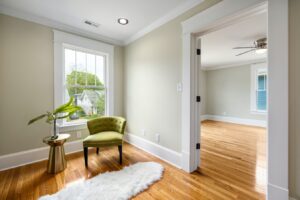
Q: What color should I paint my living room before selling? Warm whites and light warm neutrals are the strongest performers. Benjamin Moore White Dove, Sherwin-Williams Accessible Beige, and Benjamin Moore Pale Oak (OC-20) all provide a livable warmth that photographs well and appeals to the broadest demographic range. Avoid cool grays, which can read as cold in the lower-light conditions typical of many Connecticut homes in fall and winter.
Q: What about the kitchen? Soft white or warm greige on walls with white or off-white on upper cabinets is the formula that maximizes perceived kitchen size and cleanliness. For homeowners repainting cabinets as part of a pre-sale refresh, Benjamin Moore Simply White (OC-17) on uppers and a warm gray or navy on lowers is currently the most market-aligned combination in Fairfield County.
Q: Does ceiling color matter to buyers? Yes, more than most homeowners realize. A bright white ceiling, typically one shade lighter than the wall color or a dedicated ceiling white, makes rooms read as taller and more finished. Colored ceilings can be effective in the right context but require a buyer who shares that design sensibility.
Q: What color should I avoid in bedrooms when selling? Highly saturated colors, particularly deep red, purple, and bright yellow, consistently generate the most requests for repainting in buyer feedback. These are rooms where buyers imagine sleeping, and the emotional register of high-energy colors conflicts with that intent.
How sheen choices affect perceived value as much as color does
Color gets most of the attention in paint discussions, but sheen is equally important to how a room reads to a buyer. The wrong sheen on the wrong surface amplifies imperfections, makes spaces feel institutional, or creates cleaning problems that buyers factor into their assessment.
A full service interior painting project that uses flat paint throughout a home, for instance, may look clean on the day of the showing but signals to an informed buyer that every scuff mark will require repainting rather than wiping. Satin and eggshell finishes on walls communicate that the home was finished with practical livability in mind.
For living space wall repainting projects focused on resale, the standard specification is eggshell on main living areas, satin on hallways and high-traffic spaces, and semigloss on all trim, doors, and cabinetry.
The case for consistent color flow through connected spaces
Open-plan homes, which are common in Fairfield County’s newer construction and renovated colonials, require a color strategy that accounts for how spaces read when seen from one another. Abrupt color transitions between adjacent rooms reduce the sense of flow and make interiors feel smaller and less cohesive.
A tonal approach, using two or three colors from the same family at slightly different values, creates continuity without monotony. In practical terms, this means a warm white in the entry, a soft warm greige in the main living area, and a slightly deeper tone in the dining space, all from the same color family so they read as intentional rather than disconnected.
Decorative interior painting techniques like color washing or venetian plaster can add texture and depth to individual rooms without disrupting flow if they are executed in tones that coordinate with the home’s overall neutral palette. In pre-sale contexts, these techniques work best in one or two focal spaces rather than throughout, since they require a buyer who appreciates that level of finish detail.
How do you build a color strategy before listing or renovating?
A color strategy is not a list of paint chips. It is a sequenced decision-making process that accounts for architecture, light conditions, market expectations, and the relationship between spaces.
Starting with light: why undertones make or break a palette
Every neutral paint color carries an undertone, either warm or cool, and that undertone becomes highly visible once a color is on the wall in your specific lighting conditions. A color that reads as a clean warm gray in the store can read as distinctly purple or green in a room with north-facing windows.
How to identify undertones before committing:
- Paint a 12-by-12-inch sample on the actual wall and observe it at three points in the day: morning, midday, and evening under artificial light
- Hold a pure white card next to the sample. If the paint reads warm against the card, it has warm undertones. If it reads cool, the undertone is cool or neutral.
- Observe the color in the context of your fixed finishes, flooring, countertops, and cabinetry, since those surfaces carry their own undertones that will interact with the wall color
Working with a professional interior color consulting service before committing to a full-home palette saves the cost of repainting rooms where the chosen color missed in actual lighting conditions. An interior paint color consultation also accounts for how Fairfield County’s seasonal light shifts, from the bright summer light off Long Island Sound to the lower-angle winter light of December, affect how colors read year-round.
Sequencing the project: what to paint first and why
The order in which rooms are painted in a pre-sale or renovation project matters both logistically and aesthetically. Starting with the rooms that establish the primary palette prevents color decisions made in secondary spaces from conflicting with the dominant tone.
Recommended sequence for a full-home pre-sale repaint:
- Establish the main living area color first. This is the anchor of the palette and the room buyers spend the most time in during showings.
- Paint the primary bedroom second, coordinating with the living area in tone and value.
- Repaint the kitchen walls and, if included in scope, cabinetry. Kitchen color decisions are often driven by fixed finishes that are already in place.
- Complete bathrooms with moisture-appropriate products in the palette’s neutral family.
- Paint hallways, staircases, and transitional spaces last, using a tone that bridges all the above.
For homeowners planning a seasonal wall repainting project timed to the spring market, Connecticut’s peak listing season, completing interior work in late winter gives adequate dry time and allows the home to air out fully before open houses begin. Spring and early summer are also the best times to paint in Connecticut for exterior work, since temperature and humidity conditions favor optimal coating adhesion and cure time.
When to involve a professional versus doing it yourself
The decision between professional and DIY painting before a sale or renovation comes down to surface condition, scope, and the stakes of the result. For a single bedroom refresh with walls in good condition, a confident DIYer can achieve a clean result. For a full-home pre-sale repaint that will be seen by hundreds of buyers in listing photos, the calculus shifts.
Consider professional painting when:
- The project involves more than two rooms or any exterior surfaces
- Walls have significant patching, repair, or priming needs that affect final coat quality
- The timeline is compressed, with less than two weeks between painting and listing
- The home is in a higher price tier where buyers expect a level of finish quality that is difficult to achieve without professional equipment and technique
- Modern interior painting solutions or specialty finishes are part of the scope
Professional house painters in Fairfield County bring not only technical skill but also market familiarity. A crew that has painted dozens of homes in Greenwich, Westport, and Wilton understands which palettes perform in each town’s buyer demographic without needing to be briefed from scratch on every project.
Conclusion
Color is one of the most leveraged decisions a homeowner can make before selling or renovating. The right palette makes a home photograph better, feel larger, and appeal to a broader pool of buyers without requiring structural changes or major investment. In Fairfield County’s market, where buyers are informed and the competition between listings is real, a professionally executed color strategy is not an aesthetic preference. It is a competitive advantage.
The homes that sell fastest and closest to asking price in this market share a common characteristic: they present as resolved. Walls, trim, ceilings, and exteriors read as intentional, well-maintained, and move-in ready. Color is the primary tool for communicating all of that at a glance.
If you are preparing your Fairfield County home for sale or planning a renovation and want expert guidance on which colors will perform best for your specific architecture and market position, reach out to Greenhaus Painting for a free estimate and speak with a specialist who knows this market.