Outdoor wood structures add beauty, functionality, and value to a home, but they also face some of the harshest environmental conditions on a property. In Connecticut, decks and fences are exposed to intense summer sun, heavy rainfall, winter snow, humidity, and constant temperature fluctuations. Over time, these conditions take a toll on wood surfaces, causing fading, cracking, warping, and premature deterioration.
Many homeowners first notice cosmetic changes and assume the problem is purely aesthetic. In reality, visible wear is often the first sign that protective finishes are failing and the wood itself is becoming vulnerable to moisture infiltration and weather-related damage. Understanding how to protect outdoor wood surfaces is critical for extending their lifespan and avoiding expensive repairs.
Whether you are considering deck and fence painting Fairfield County services, evaluating deck staining options, or simply trying to preserve your outdoor living spaces, knowing how paint, stain, preparation, and maintenance work together can help you make better decisions for your property.
Here’s what you’ll learn:
- When your deck starts looking “weathered” faster than you expected
- The decision between painting and staining and why it actually matters
- Why fences often fail sooner than the house exterior
- What proper prep work looks like before any coating goes on
Keep reading to learn what Fairfield County homeowners need to know about protecting decks and fences from Connecticut’s demanding climate before deterioration becomes a costly repair.
When your deck starts looking “weathered” faster than you expected
Many homeowners are surprised by how quickly outdoor wood surfaces begin showing signs of wear. A deck or fence that looked beautiful a few years ago may suddenly appear faded, rough, or aged despite receiving relatively little attention.
The reality is that wood deterioration often begins long before visible damage becomes obvious.
The early signs of sun and moisture damage most homeowners overlook
Weather damage rarely appears overnight. Instead, it develops gradually through repeated exposure to environmental stress.
Common early warning signs include:
- Slight fading of stain or paint color
- Small surface cracks in boards
- Raised wood grain textures
- Minor splintering along deck surfaces
- Uneven discoloration in sun-exposed areas
- Water no longer beading on the surface
Because these symptoms develop slowly, many homeowners do not recognize them as indicators of protective coating failure.
The finish on a deck or fence serves as the first line of defense against weather exposure. Once that protection begins to weaken, moisture and ultraviolet radiation can penetrate deeper into the wood.
Why fading color is usually a deeper structural warning
Many people view fading as a purely cosmetic issue. While appearance certainly changes, color loss often indicates something more significant.
According to the USDA Forest Products Laboratory, outdoor weathering of wood begins with photo-oxidation driven by UV radiation in sunlight, and the process is reinforced by rain, temperature changes, moisture fluctuations, and windblown particles. The weathering process typically starts with color change and progresses to gradual surface erosion. As finishes deteriorate, they become less capable of:
- Blocking moisture absorption
- Preventing surface erosion
- Reducing temperature-related expansion and contraction
- Protecting against mold and mildew growth
When ignored, fading can eventually progress to:
- Surface cracking
- Wood splitting
- Board warping
- Rot development
- Structural weakening
What appears to be a simple color issue may actually be the beginning of a much larger maintenance problem.
How Connecticut seasons speed up wood breakdown
Connecticut’s climate presents unique challenges for outdoor wood structures.
Throughout the year, decks and fences experience:
- Hot summer sunlight
- High humidity levels
- Heavy rain events
- Winter snow accumulation
- Freeze-thaw cycles
- Spring moisture saturation
These conditions create continuous stress on wood surfaces.
As wood absorbs moisture, it expands. As it dries, it contracts. Repeated expansion and contraction gradually weaken fibers and create opportunities for cracking and separation.
This is one reason why weather damage wood decks CT homeowners encounter often develops faster than expected, particularly when protective coatings are not maintained consistently.
The decision between painting and staining and why it actually matters
One of the most common questions homeowners face is whether to paint or stain their deck or fence. While both options provide protection, they function differently and are suited to different situations.
The choice affects appearance, maintenance requirements, and long-term performance.
When stain protects better than paint (and when it doesn’t)
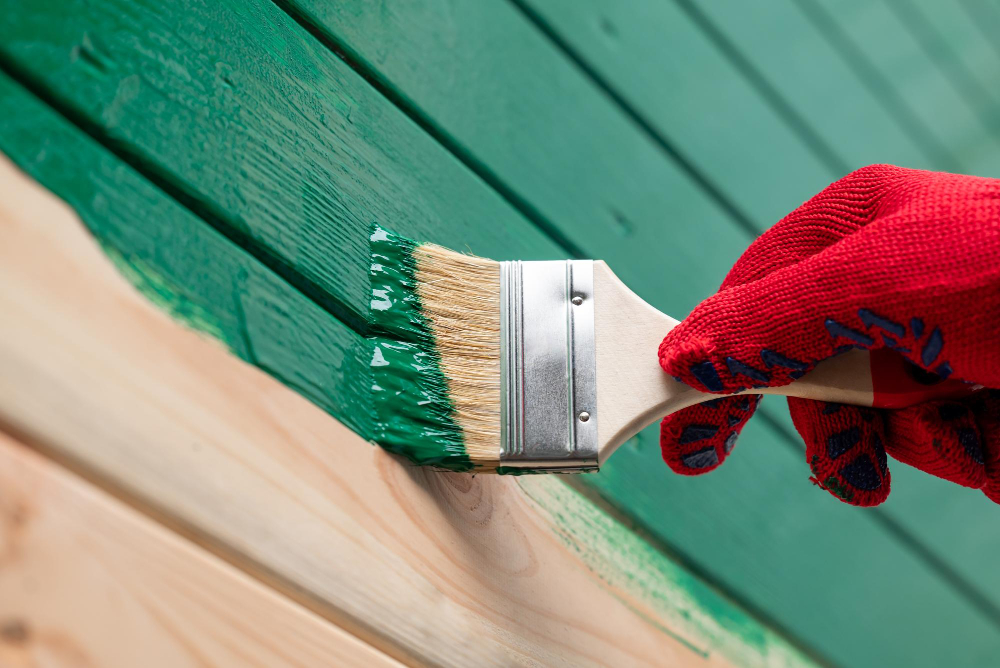
Stain works differently from paint because it penetrates the wood rather than forming a thick film on the surface.
Advantages of stain often include:
- Better visibility of natural wood grain
- Easier maintenance and reapplication
- Reduced risk of peeling
- Improved penetration into wood fibers
For many decks, stain provides excellent protection while preserving the natural character of the wood.
However, paint can offer advantages in certain situations:
- Greater color customization
- More complete surface coverage
- Enhanced protection from ultraviolet exposure
- Ability to conceal cosmetic imperfections
The choice between fence painting vs staining depends on the condition of the wood, aesthetic goals, and maintenance expectations.
Neither option is universally better. The best solution depends on the specific project.
How appearance goals can affect long-term durability
Homeowners often focus on color selection and visual style when choosing finishes. While appearance is important, aesthetic preferences can influence maintenance requirements.
For example:
- Dark colors may absorb more heat
- Solid coatings may hide defects but require more extensive preparation
- Transparent stains emphasize natural grain but reveal imperfections
Durability is often linked to the compatibility between the coating and the wood substrate.
A finish that looks beautiful initially may not perform well if it is not appropriate for the wood species, exposure conditions, or existing surface condition.
Balancing aesthetics with performance is one of the most important aspects of successful exterior wood finishing.
What contractors consider before recommending either option
Professional painters and wood finishing specialists evaluate multiple factors before recommending paint or stain.
These factors often include:
- Wood species and age
- Current coating condition
- Moisture content of the wood
- Exposure to sunlight and weather
- Desired appearance
- Long-term maintenance preferences
For example, older wood with significant surface wear may benefit from a different coating system than newer lumber.
Experienced exterior painting contractors Fairfield County understand that product selection should be based on performance requirements rather than appearance alone.
A tailored recommendation helps maximize both longevity and visual appeal.
Why fences often fail sooner than the house exterior
Many homeowners notice that fences seem to deteriorate more quickly than siding, trim, or other painted exterior surfaces.
This is not an illusion. Fences often face harsher environmental conditions than many parts of the home.
The exposure problem that makes fences deteriorate faster than decks
Unlike decks, which often receive some protection from railings, furniture, or nearby structures, fences are typically exposed on all sides.
This means fences endure:
- Direct sunlight throughout the day
- Constant airflow and drying cycles
- Rain exposure on both faces
- Snow accumulation along the base
- Increased moisture retention near the ground
Because of this exposure, fences frequently experience faster finish degradation.
Protective coatings must withstand more environmental stress than many homeowners realize.
Without routine maintenance, deterioration can accelerate rapidly. Scheduling seasonal repainting before a coating reaches full failure is almost always more cost-effective than waiting until replacement becomes necessary.
Why ground moisture changes everything for wood lifespan
One of the most significant threats to fence longevity comes from below rather than above.
Ground moisture affects:
- Fence posts
- Lower rails
- Bottom pickets
- Areas with poor drainage
Even when the upper portions of a fence remain in good condition, moisture near the soil line can lead to:
- Rot development
- Fungal growth
- Structural weakening
- Post instability
According to the U.S. Environmental Protection Agency, mold can weaken structural wood over time when moisture problems go unaddressed, as mold organisms feed on wet wood and gradually compromise its integrity. This risk applies directly to fence posts and base rails exposed to persistent ground contact and moisture.
Effective exterior wood protection Connecticut homeowners rely on must address moisture management as well as surface coatings.
Small maintenance habits that prevent expensive replacements
Many fence failures result from deferred maintenance rather than unavoidable aging.
Simple preventative measures include:
- Removing vegetation from fence lines
- Keeping sprinklers from saturating wood surfaces
- Inspecting for loose boards regularly
- Cleaning debris accumulation near posts
- Touching up damaged coatings promptly
These small actions can significantly extend the lifespan of wood fencing.
Regular inspections also help identify problems before major repairs become necessary.
What proper prep work looks like before any coating goes on
The quality of a paint or stain application depends heavily on preparation. In many cases, preparation determines durability more than the coating itself.
Professional results begin long before the first coat is applied.
Why washing and sanding matter more than most people expect
Outdoor wood surfaces accumulate contaminants that interfere with coating adhesion.
Common contaminants include:
- Dirt and dust
- Mold and mildew
- Pollen
- Algae growth
- Oxidized wood fibers
- Previous coating residue
Proper washing removes these materials and creates a clean foundation.
Sanding provides additional benefits by:
- Smoothing rough surfaces
- Removing loose fibers
- Eliminating failing coatings
- Improving coating penetration and adhesion
Skipping preparation may save time initially, but it often results in premature coating failure.
The risk of painting over trapped moisture or old peeling layers
One of the most common causes of coating failure is applying new finishes over compromised surfaces.
Potential problems include:
- Trapped moisture beneath coatings
- Existing paint that is already separating
- Hidden mold growth
- Inadequate surface drying
When new paint or stain is applied over these conditions, adhesion is compromised.
This can lead to:
- Peeling
- Bubbling
- Flaking
- Uneven appearance
- Reduced lifespan
Professional contractors carefully evaluate moisture levels and existing surface conditions before beginning any coating project. Understanding how to address peeling and failing paint is as important outdoors as it is on interior surfaces.
How timing between seasons affects adhesion and results
Environmental conditions play a major role in coating performance.
Successful applications typically require:
- Appropriate temperature ranges
- Stable weather forecasts
- Moderate humidity levels
- Adequate drying time between coats
In Connecticut, seasonal timing can significantly influence outcomes.
According to the USDA Forest Products Laboratory, latex-based paint systems are generally the most durable option for wood exposed outdoors because their flexibility allows them to better accommodate the dimensional changes wood undergoes as moisture levels fluctuate through the seasons. Solvent-based systems can become brittle over time and tend to crack and peel sooner.
Applying coatings too early in spring may expose surfaces to lingering moisture. Waiting too late in the fall can interfere with curing due to lower temperatures. Understanding the best timing for exterior painting in Connecticut is an important part of any successful outdoor project.
Experienced contractors schedule projects based not only on availability but also on weather conditions that support proper adhesion and curing.
This attention to timing helps maximize coating performance and longevity.
Conclusion
Maintaining outdoor wood structures requires more than occasional cleaning or cosmetic updates. Connecticut’s climate subjects decks and fences to constant stress from sunlight, moisture, temperature fluctuations, and seasonal weather extremes. Understanding how these factors affect wood is essential for protecting your investment and extending the lifespan of outdoor structures.
Whether you are evaluating deck and fence painting Fairfield County services, considering deck staining, or comparing fence painting vs staining options, the most important factors are proper preparation, appropriate product selection, and ongoing maintenance. When applied correctly, high-quality coatings provide critical exterior wood protection Connecticut homeowners need to defend against weather-related deterioration.
Ignoring early warning signs of fading, cracking, or moisture damage often leads to more extensive repairs and higher costs down the road. By addressing issues early and working with experienced exterior painting contractors Fairfield County, homeowners can preserve the appearance, functionality, and value of their decks and fences for years to come.
At Greenhaus Painting, we help homeowners throughout Fairfield County protect and enhance their outdoor living spaces through professional painting, staining, and wood restoration services. From surface preparation to final coating application, our team focuses on craftsmanship, durability, and long-term performance to keep your decks and fences looking their best in every season. Contact us for a free estimate.